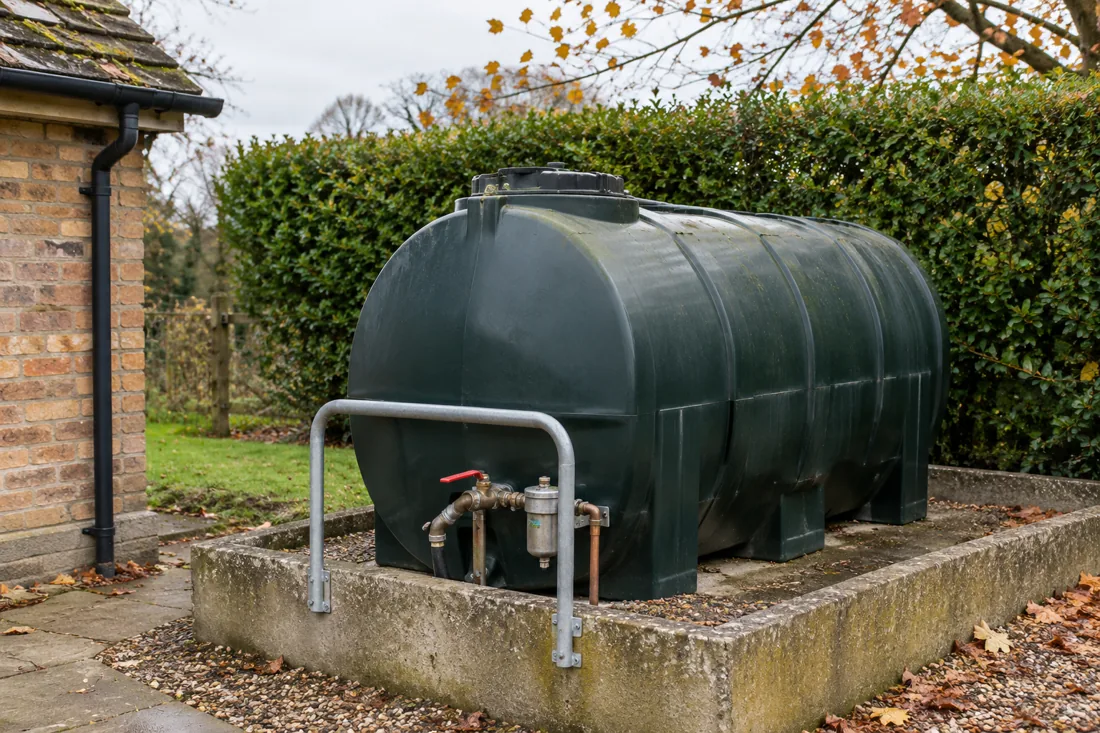
Keep People Away And Do Not Wash Oil Away
Keep children, pets and unnecessary activity away from the affected area. Avoid flames, smoking and work that could introduce an ignition source. Do not wash spilled oil into a drain, add detergent or disturb the tank in an attempt to find a hidden crack.
Use the official environmental incident reporting service if pollution is affecting water or the environment. Where there is an immediate threat to people, use the appropriate emergency service. Contact your insurer promptly about a suspected loss and ask about approved response arrangements before commissioning substantial clean-up work.
A Smell Is A Clue, Not A Diagnosis
An oil smell can come from a spill at a fill point, a faulty fitting, damaged pipework or a tank defect. A falling level can also be affected by gauge errors and changing consumption. Give the assessor what you observed and when, rather than deciding from a smell alone that the entire tank must be replaced.
Tell them if odour is noticeable indoors, if staining is growing or if the boiler or generator has become unreliable. Mention recent deliveries, maintenance or accidental impact. Do not lean on damaged plastic, climb onto the tank or open fittings to search for the leak.
Containment And Fuel Recovery
The initial professional assessment establishes whether oil is still escaping, where it may travel and how the system can be made safe. Recovery may involve transferring remaining usable fuel to suitable storage, with contaminated liquids and residues handled separately. Access for pumps, hoses and temporary containment matters from the outset.
A bund can help retain oil from an inner tank leak, but the assessor still needs to check its condition and contents. Water or oil in a containment space should not be drained onto the ground. A temporary repair should never be assumed to restore a damaged tank’s long-term suitability.
Repair, Replace Or Retire?
A connection fault may need a different remedy from a split tank wall. Suitability for repair depends on material, damage and the proposed method, and needs a competent decision. A structurally damaged plastic tank generally calls for replacement rather than an improvised patch.
If oil is still needed, a replacement programme should include the fuel transfer, support, pipework and restart. If the system is being retired, removal may follow recovery and preparation. The urgent task of reducing further loss and the permanent solution may require separate visits or scopes.
The Ground May Need Separate Work
Oil can move through soil, beneath paving and towards drainage routes. Removing a leaking tank does not remove oil that has already escaped. An environmental specialist may need to assess affected material and advise on sampling, remediation and how completion will be demonstrated.
Keep a record of observations, photographs taken safely, delivery information and conversations with the insurer or authorities. Avoid digging up stained soil or covering it before advice is obtained. On a commercial site, preserve incident information and coordinate the response with the person responsible for environmental management.
What To Tell Us And What To Agree
Give the postcode, fuel type, tank capacity if known and an approximate remaining level. Describe whether the loss is active, how close it is to a drain or water, and whether the tank serves occupied heating or standby equipment. Photographs should show the tank, base, staining and vehicle access without entering the affected area.
Costs depend on fuel recovery, temporary storage, tank work and the extent of any contamination. Ask for these elements to be distinguished, with waste classification and relevant records identified. Any installation work should have its own handover documentation, while an environmental clean-up needs evidence matched to its separate agreed scope.
Common Questions
Should I Wait Until The Tank Is Nearly Empty?
A leaking oil tank should not be left to run down before advice is sought. Further loss can spread beyond the tank base and make recovery harder. Explain the suspected leak promptly to a suitable contractor and your insurer, and report environmental pollution through the official route. Do not book another delivery into a suspect installation.
Will A New Tank Fix Oil Already In The Ground?
A new oil tank stops reliance on the defective installation once the system is safely changed, but it does not remove an existing spill. Contaminated ground or water may need separate investigation and treatment. Agree the scope of tank work and environmental work clearly so that replacing the vessel is not mistaken for completing the clean-up.
Tell Us About Your Tank
A postcode, photographs of the installation and an outline of the access are a useful starting point. Mention any suspected leak at the start of your enquiry.
Send A Tank Enquiry