Start With The Fuel Demand
Identify the fuel type, equipment served and expected use. For home heating, previous consumption can help if it reflects the building as it will be used. For a generator, supply the equipment information and the required operating arrangement, including whether the tank is dedicated to backup duty.
Allow for delivery access and realistic refill planning. Capacity needs to balance space, usable storage and fuel turnover. Discuss future changes such as an extension, new boiler or added equipment before the tank is selected. Avoid ordering from dimensions alone and discovering later that the fittings cannot be reached.
Assess Siting Before Buying
A position assessment considers fire exposure from nearby structures, boundaries, openings and the risk of oil reaching drains or water. The fill and vent points must suit safe delivery, while inspection and maintenance need room around the installation. Screening or a new fence should not hide access or interfere with the tank.
For domestic work, OFTEC’s oil storage guidance is a useful starting point for siting and support. A competent installer should apply the guidance to the actual property. Listed buildings, conservation constraints or wider building work may also need advice from the relevant planning or Building Control service.
Containment And Support
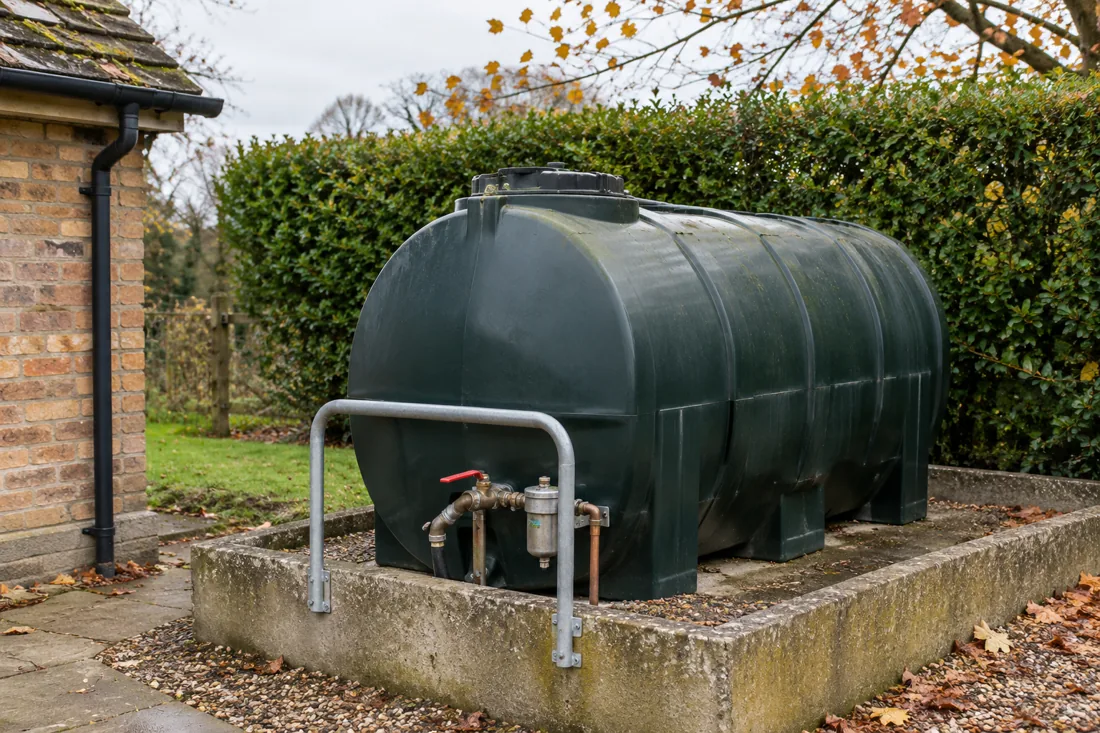
An integrally bunded tank includes secondary containment around the primary tank. Whether a particular arrangement is required depends on the setting and applicable rules, so the specification needs a pollution-risk assessment. Nearby water, drains and the way the ground falls can matter even where the tank itself is small.
The base must suit the manufacturer’s requirements and the filled weight, with a stable, level support arrangement. Include excavation, ground preparation and the final base dimensions in the design. Soft ground, tree roots and restricted working space can change the groundwork needed and the order of installation.
Route The Supply As A System
The tank, oil line, valves, filter and equipment connection should be considered together. A longer pipe route can introduce additional work and protection requirements. Agree how exposed sections will be protected from damage and how the route will be recorded for future gardening, maintenance or construction.
A commercial installation also needs coordination with the equipment engineer and site contact. Identify who is responsible for control interfaces, level monitoring and acceptance testing where relevant. The tank contractor’s boundary should be written down so that a gap between fuel storage and the connected plant does not emerge at handover.
Installation And First Use
The programme should establish when the base is ready, how the tank enters the site and when connections can be completed. Confirm delivery vehicle access and avoid arranging the first oil delivery before the installer has released the system for use. A missed sequencing step can create an unnecessary spill risk.
At commissioning, the contractor checks the agreed installation and explains its operation, access points and inspection needs. Request the manufacturer’s instructions and a clear record of what was installed. A new tank should have an agreed handover before routine fuel ordering starts, rather than being left for the fuel driver to assess.
Permissions, Records And Cost Drivers
New domestic oil storage normally needs to meet Building Regulations in England. Confirm how compliance will be handled through an appropriate competent-person scheme or Building Control. Commercial oil storage has a separate regulatory context, described in GOV.UK’s business storage guidance, and should be assessed against the actual use.
Tank construction, capacity, groundwork, pipe length, protective measures and access affect the price. Send a site sketch, postcode, equipment details and photographs of the proposed position and route from the road. Ask the quotation to identify design assumptions, exclusions, commissioning responsibility and the installation or compliance documents to be supplied.
Common Questions
Can I Buy A Tank Before The Survey?
Oil tank installation is easier to specify before you buy a tank. Product dimensions, support requirements, containment and fitting positions all affect suitability. Send the proposed model and manufacturer’s information for review first, particularly if the tank must pass through a narrow route or sit near a building, drain or boundary.
Does Commercial Installation Follow The Home Rules?
Commercial oil tank installation needs an assessment for its own use and location. Home heating guidance is not a complete specification for a business fuel store or standby system. Tell the contractor whether the tank supplies heating, a generator or other equipment, and ask which storage, fire and workplace controls apply to that arrangement.
Tell Us About Your Tank
A postcode, photographs of the installation and an outline of the access are a useful starting point. Mention any suspected leak at the start of your enquiry.
Send A Tank Enquiry