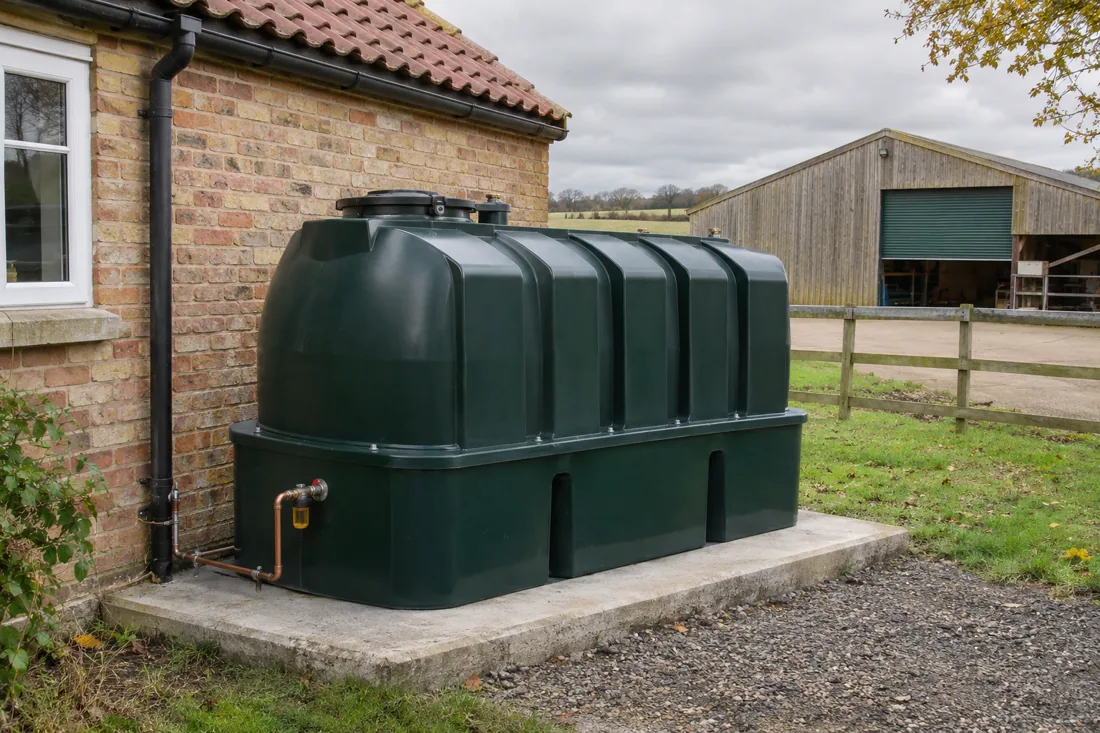
When Replacement Makes Sense
Cracking, distortion, significant corrosion and failing supports are reasons for prompt professional assessment. Recurrent contamination may need cleaning, but cleaning cannot restore a structurally unsound tank. If there is active oil loss, start with the leaking tank guidance and tell the contractor about the leak before arranging a routine changeover.
A planned extension or altered boundary can also change the suitability of an existing position. Think about future maintenance and delivery access, rather than choosing a tank solely because it fits today. A move to another position can be incorporated into the replacement scope.
Choose Capacity And Construction Together
Tank capacity should reflect consumption, delivery habits and the needs of the equipment it supplies. Domestic heating and a low-turnover standby generator use stored fuel differently. A larger tank is not automatically useful if the fuel sits for long periods or the delivery vehicle cannot reach the fill point safely.
Plastic and steel options need suitable support and accessible fittings. A bunded tank has a containment space intended to capture leaks from the primary vessel. Ask for the exact product specification, since a description such as double skin does not establish the containment performance or suitability for your location.
Check The Position And Base
The assessment covers nearby buildings, boundaries, vegetation, drains and the direction a spill could travel. Fire protection, pollution risk and the manufacturer’s instructions inform the proposed arrangement. OFTEC’s domestic storage guide explains why tank siting and support deserve attention rather than being left to the delivery day.
The old base may be usable, but only if its dimensions, condition and support match the replacement tank. New groundwork can affect timing, especially where material needs to cure. Agree who supplies the base, who checks it and whether pipework trenches or other making good are included.
Keep Usable Fuel, Plan The Interruption
Remaining oil can often be recovered, subject to a check for contamination and a suitable temporary holding arrangement. It should not be assumed that everything in the old tank can go into the new one. Removing water and sediment separately avoids carrying a known problem into the replacement.
Heating or equipment will be unavailable during disconnection and reconnection. A temporary supply may be an option for a longer programme, but it needs its own safe arrangement and cost allowance. Commercial sites should identify who authorises the shutdown and whether standby provision is needed during the change.
What To Send For A Replacement Quote
Send a full view of the existing tank, the base and each connection, plus a wider view towards the house or plant. Include the data plate if readable, the fuel type, rough remaining level and why you are replacing it. Photographs should be taken from normal accessible positions without climbing or opening the tank.
Add the postcode, narrowest access width and any new location you have in mind. Mention steps, shared paths, locked gates, parking restrictions and vulnerable ground. If you have a product in mind, send its specification before buying, so access and support can be checked against the actual dimensions.
Compare The Complete Scope
A useful quotation separates tank supply, delivery, removal, fuel handling, base work, pipework and commissioning. Capacity, construction, access and interruption arrangements affect the total. If one price appears lower, check whether it excludes the old tank, contaminated contents or Building Regulations notification.
In England, new domestic tank work normally falls within Building Regulations. GOV.UK explains the competent-person and Building Control routes. Confirm the chosen route and the installation, commissioning and warranty documents with the named contractor. Keep these together with waste records and instructions for inspection and future deliveries.
Common Questions
Can Replacement Happen Without Losing All Heating?
Oil tank replacement requires an interruption while the supply is disconnected and connected again. A temporary fuel arrangement can be considered for a longer job, subject to a site assessment. Explain any health, occupancy or operational needs early so the programme and the limits of temporary heating can be discussed before booking.
Can The Old Pipework Be Reused?
Oil tank replacement can retain existing pipework where its condition, route and specification remain suitable. That needs checking alongside valves, filters and the proposed tank position. A quotation should identify retained components and any new sections, rather than treating all concealed pipework as sound simply because the previous tank was still in service.
Tell Us About Your Tank
A postcode, photographs of the installation and an outline of the access are a useful starting point. Mention any suspected leak at the start of your enquiry.
Send A Tank Enquiry